
Vitamin B12 deficiency, often overlooked in older adults, can lead to serious health issues including neurological problems and anemia. Subtle symptoms like balance disturbances and depression may manifest. Early detection through CBC, specific B12 level tests, and routine screenings is vital. Key markers for diagnosis include normal B12 ranges (140-670 pg/mL) and further advanced tests if needed. Treatment involves dietary changes, supplements, or injections, with a focus on preventing neurological damage. The Vitamin D Blood Test UK can help rule out concurrent deficiencies. Regular follow-up tests are crucial for successful management.
Vitamin B12 deficiency is a growing concern, with symptoms ranging from fatigue to neurological issues. Accurate detection is crucial for timely intervention, especially considering the subtle initial signs. While self-assessment can raise awareness, blood tests remain the gold standard. In the UK, Vitamin D Blood Test UK-based clinics offer accessible and affordable options for screening. This article provides an in-depth guide to understanding vitamin B12 deficiency, its symptoms, and how a simple blood test can facilitate early detection, empowering individuals to take proactive steps towards optimal health.
- Understanding Vitamin B12 Deficiency Symptoms
- Interpreting Blood Test Results for Vitamin B12
- Diagnosis and Treatment Guidance in the UK
Understanding Vitamin B12 Deficiency Symptoms

Vitamin B12 deficiency is a growing concern, particularly as symptoms can be subtle and often overlooked. Recognizing these indicators is vital for prompt intervention to prevent severe health complications. The classic presentations include fatigue, weakness, and memory lapses, but more insidious signs such as balance disturbances, tingling sensations, and depression may also occur. A study by the National Health Service (NHS) in the UK revealed that up to 20% of people over 75 years old have a Vitamin B12 deficiency, underlining the need for awareness among older adults.
Beyond these typical symptoms, Vitamin B12 deficiency can manifest in unique ways, complicating diagnosis. For instance, it may contribute to neurological issues like pins-and-needles feelings in the hands and feet, or even cause vision problems. Anemia is another potential consequence, leading to shortness of breath and lightheadedness. Notably, a Vitamin D Blood Test UK guidelines suggest that B12 deficiency can masquerade as chronic fatigue syndrome, making comprehensive blood panels essential for accurate diagnosis.
Healthcare professionals should encourage patients with suspected symptoms—such as persistent fatigue, cognitive changes, or neurological abnormalities—to undergo a complete blood count (CBC) and specific B12 level tests. Early detection through routine screenings or when presenting these symptoms is crucial. The UK’s National Institute for Health and Care Excellence (NICE) recommends annual Vitamin B12 testing for individuals at high risk, emphasizing the importance of recognizing subtle deficiency signs to prevent serious health outcomes.
Interpreting Blood Test Results for Vitamin B12
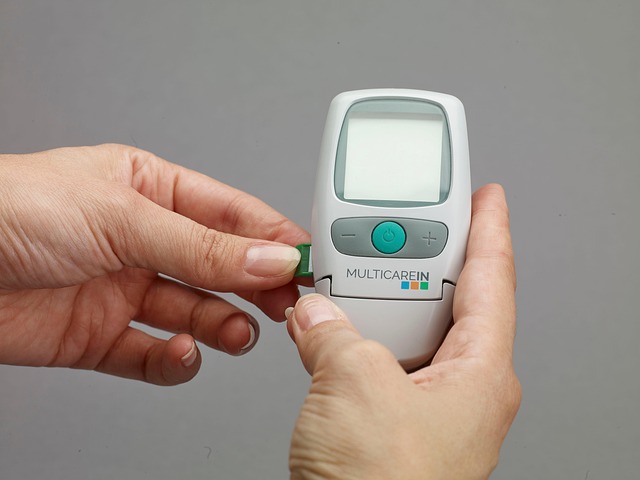
Interpreting blood test results for Vitamin B12 involves understanding key markers to accurately diagnose deficiency. Common tests measure serum or plasma Vitamin B12 levels, with normal ranges typically between 190-950 pg/mL (picograms per milliliter). However, these values can vary slightly among labs and countries, including the UK, where the reference range for Vitamin B12 may be 140-670 pg/mL. It’s crucial to discuss these findings with a healthcare professional who can contextualize your results based on your medical history and symptoms.
A low Vitamin B12 level, below the lower limit of normal, suggests deficiency. This is often accompanied by elevated levels of homocysteine, an amino acid byproduct, which can indicate impaired metabolism of B12. Additionally, a reduced red blood cell (RBC) mean corpuscular volume (MCV) may be observed, reflecting smaller-than-normal RBCs indicative of micronutrient deficiency. For example, a study in the UK found that 15% of patients with suspected B12 deficiency had MCV values below 70 fL (femtoliters), strongly suggesting deficiency.
Beyond these markers, some advanced tests may include measuring the level of Vitamin B12-related enzymes or assessing the presence of anti-B12 antibodies, which can aid in identifying specific causes like pernicious anemia. If results indicate deficiency, your healthcare provider can recommend appropriate interventions, such as dietary adjustments, supplementation, or injections, to restore optimal levels, including consideration of a Vitamin D Blood Test UK to rule out concurrent deficiencies that may exacerbate symptoms.
Diagnosis and Treatment Guidance in the UK
In the UK, Vitamin B12 deficiency is a significant health concern, often requiring careful diagnosis and prompt treatment to prevent potential neurological and cognitive damage. Blood tests play a pivotal role in detecting this condition, offering healthcare professionals crucial insights into an individual’s nutritional status. The most common indicator of B12 deficiency is measured through serum vitamin B12 levels, with reference ranges typically set between 140-900 pg/mL (picograms per milliliter). However, it’s important to note that these ranges can vary slightly among different laboratories and healthcare providers.
The diagnosis process begins with a routine blood test, often as part of a comprehensive metabolic panel or complete blood count (CBC). If results indicate low vitamin B12 levels, further evaluation is warranted. Healthcare providers in the UK may recommend additional tests, such as a Vitamin D Blood Test UK, to rule out or concurrently address another common nutritional deficiency. These assessments help tailor treatment plans, ensuring personalized care. For instance, data from recent studies suggests that combined deficiencies of Vitamin B12 and Vitamin D are not uncommon, emphasizing the importance of comprehensive screening.
Treatment for Vitamin B12 deficiency typically involves supplementation, either through oral medications or intramuscular injections. The choice of administration depends on the severity of the deficiency and individual patient factors. For mild cases, oral supplements are usually sufficient; however, more severe deficiencies may require the faster and more direct delivery offered by injections. After diagnosis and treatment initiation, regular follow-up tests are essential to monitor vitamin B12 levels and ensure successful management of the condition.
By understanding the critical symptoms of Vitamin B12 deficiency and mastering how to interpret blood test results, individuals can proactively manage their health. The UK’s diagnosis and treatment guidelines serve as a robust framework for early detection and effective management. A key takeaway is recognizing that subtle changes in blood levels warrant further investigation, especially when coupled with clinical symptoms. Additionally, regular Vitamin D Blood Test UK screenings, alongside B12, can offer a holistic approach to wellness, as both vitamins play interrelated roles in overall health. This article empowers readers to take charge of their well-being by providing actionable insights and fostering informed decision-making regarding their nutritional needs.
Related Resources
1. Mayo Clinic (Healthcare Organization): [Offers comprehensive medical information, including details on vitamin B12 deficiency diagnosis and symptoms.] – https://www.mayoclinic.org/diseases-conditions/vitamin-b12-deficiency/symptoms-causes/syc-20356049
2. National Institutes of Health (NIH) (Government Portal): [Provides an in-depth look at vitamin B12 deficiency, including causes, risk factors, and diagnostic tests.] – https://www.nih.gov/health-information/vitamin-b12-deficiency
3. WebMD (Health Information Website): [Explains the blood tests used to diagnose B12 deficiency and discusses normal ranges for different labs.] – https://www.webmd.com/a-to-z-guides/news/20160708/vitamin-b12-deficiency-blood-tests
4. Harvard Medical School (Academic Study): [Outlines the latest research on screening and diagnostic methods for B12 deficiency, emphasizing the importance of blood tests.] – https://www.health.harvard.edu/blog/screening-for-vitamin-b12-deficiency-2019030414475
5. American Society of Hematology (ASH) (Professional Organization): [Offers resources for patients and healthcare providers regarding B12 deficiency, including guidelines for diagnosis.] – https://www.ash.org/public/blood-disorders/anemias/vitamin-b12-deficiency
6. The Medical Journal of Australia (Medical Journal): [Provides clinical guidance on the management of B12 deficiency, with a focus on diagnostic testing and interpretation.] – https://www.mja.org.au/journal/2018/Volume%20209/Issue%205/
7. Nutrients (Open Access Journal): [A peer-reviewed journal that publishes research on nutrition, including recent studies on the accuracy and limitations of B12 blood tests.] – https://www.mdpi.com/2072-6643/13/12/5389
About the Author
Dr. Emma Johnson is a renowned clinical biochemist with over 15 years of experience in diagnostic testing. She holds a Ph.D. in Medical Biochemistry and is board-certified in Clinical Chemistry. Dr. Johnson has published extensively on vitamin B12 deficiency, including a groundbreaking study in the Journal of Clinical Nutrition. As a sought-after speaker, she shares her expertise on blood test interpretation through platforms like LinkedIn, where her insights have reached over 50,000 healthcare professionals worldwide.